Laparoscopy (keyhole surgery)
Overview
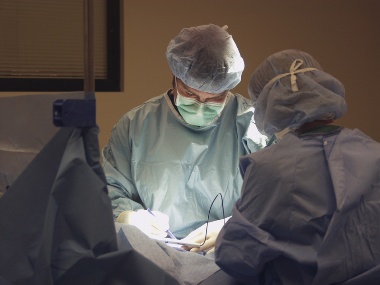
Laparoscopy is a type of keyhole surgery used to diagnose and treat conditions. It allows a surgeon to use only small cuts and a camera for procedures inside the tummy or pelvis.
Preparing for a laparoscopy
The hospital will give you information about how to prepare for a laparoscopy.
Depending on why you're having a laparoscopy, you may be asked to do certain things, such as:
- not eating or drinking
- stop taking certain medicines, such as anticoagulants
- stop smoking
You cannot drive after having a laparoscopy, so you'll need to organise for someone to drive you home.
What happens during a laparoscopy
If you're having a laparoscopy to diagnose a condition, it usually takes between 30 and 60 minutes. It'll be longer if you're having surgery to treat a condition.
A laparoscopy is done under general anaesthetic, so you'll be asleep during the operation and will not feel any pain.
- The surgeon will make a small cut, usually near your belly button.
- Air is pumped into your tummy through the cut so the surgeon can see inside your tummy more easily.
- A thin, flexible tube with a camera inside (a laparoscope) is then put into the cut so video images of the inside of your tummy can be shown on a screen.
- If you're having surgery, more small cuts may need to be made in your tummy for the surgeon to pass their tools through.
- When it's finished, the air is let out of your tummy and the cuts are closed with stitches or clips, and a dressing is placed on top.
After the operation
You'll spend some time in the recovery room and have medicine to help with pain and swelling.
After the operation, you may:
- feel sick or be sick
- feel more tired than normal
- have a sore throat
- have bloating, cramps or pain and discomfort in your tummy
- get shoulder pain
- have bruises around your wounds
Most people can leave hospital either on the same day or the day after.
Recovering from a laparoscopy
How long it takes to recover from a laparoscopy varies.
It usually takes up to 5 days if you had it to diagnose a condition, or up to 6 to 8 weeks to fully recover if you've had surgery.
There are things you can do to help your recovery.
Do
- take paracetamol or ibuprofen to help with any pain
- make sure you drink lots of fluids and have a healthy diet
- wear compression stockings if you've been given some
- move around as much as you can
- do foot and leg exercises, such as moving your ankles in circles, while you're resting
- keep your wound dry for the first 24 hours – you can shower after this, but make sure the water is not too hot, as it can make the wounds bleed
Don't
- do not have a bath for the first 2 weeks, or until the wound has healed
- do not drive for 48 hours or until you can do an emergency stop (but check with your insurer first)
- do not fly for 48 hours after having a laparoscopy
- do not drink alcohol for 48 hours
- do not smoke as it can take your body longer to heal
Possible complications of a laparoscopy
A laparoscopy is a common procedure.
Complications are rare, but can include:
Ask for an urgent GP appointment or get help from NHS 111 Wales if:
You recently had a laparoscopy and:
- you have a high temperature or are getting chills
- you have severe or continuous vomiting
- your tummy pain is getting worse
- your tummy is bloated
- there's pain, swelling, bleeding or pus or redness around your wounds – the redness may be more difficult to see on brown or black skin
- you have any unusual bleeding or discharge from your vagina, penis or bottom
- you have pain and swelling in 1 of your legs
- you're coughing up blood
- you have difficulty breathing – you may be more short of breath than usual
You can call 111 or get help from 111 Wales online.
Call 999 or go to A & E if:
You recently had a laparoscopy and:
- you have a very fast heartbeat
- you have pain in your chest
- you have severe difficulty breathing – you're gasping, choking or not able to get words out
Find your nearest A & E
The information on this page has been adapted by NHS Wales from original content supplied by  NHS website nhs.uk
Last Updated:
17/06/2026 10:50:33